Recap: NCGA Members Meet for the 23rd Annual Holshouser Legislators Retreat
April 27, 2026
The Hunt Institute hosted North Carolina legislators April 19–20, 2026, in Durham for its 23rd Annual Holshouser Legislators Retreat. Named for former Republican Governor Jim Holshouser (1973–77), the bipartisan event focused on education policy. This year’s co-chairs were Sen. Sydney Batch, Sen. Brad Overcash, Rep. Zach Hawkins, and Rep. David Willis.
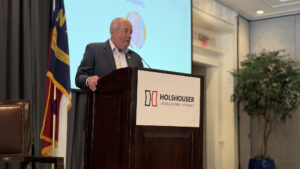
The first session, “Early Learning as an Economic Driver in North Carolina”, examined how early childhood education affects North Carolina’s economy and workforce readiness. After opening remarks from Retreat Co-Chair Representative David Willis, Samantha Cole, Child Care Business, NC Department of Commerce moderated the discussion about NC Pre-K, Head Start, and Smart Start, including the effects of federal funding changes and local factors in smaller counties. Amy Cubbage, President, North Carolina Partnership for Children and Candace Witherspoon, Director, Division of Child Development and Early Education, NC Department of Health and Human Services served as panel resource experts.
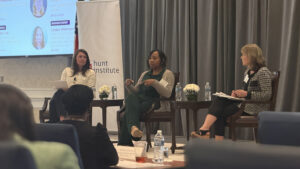
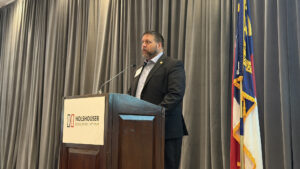
Senator Sydney Batch, Retreat Co-Chair, then introduced the “Strengthening Special Education in North Carolina” panel moderated by Dr. Ereka R. Williams, Vice President, Education, Dogwood Health Trust. The conversation explored the pressuring challenges facing special education in North Carolina, from federal funding reductions to restrictions on per-school budget flexibility. Resource experts, Dr. Carol Ann M. Hudgens, Senior Director, North Carolina Department of Public Instruction and Dr. Robert Taylor, Superintendent, Wake County Public Schools shared evidence-based practices from districts across the state and identified actionable policy solutions.
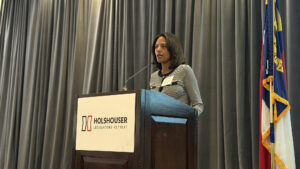
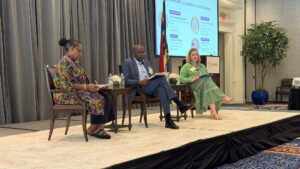
After a networking break, Dr. Mary C. Wall, Vice President, Policy & Engagement, Curriculum Associates provided opening remarks for the Professional Perspectives session. Dr. Siobahn Day Grady, Associate Professor and Founding Director of the Institute for Artificial Intelligence and Emerging Research, NC Central University facilitated the Professional Perspectives session where legislators met with K–12 superintendents and school based leaders to explore the use of artificial intelligence in classrooms and student cell phone policies. Dr. Mitch Prinstein, Distinguished Professor of Psychology and Neuroscience and Dr. Eva Telzer, Professor of Psychology and Neuroscience, The University of North Carolina at Chapel Hill shared a presentation on the effects of adolescent development with the use of technology and social media. They overviewed how critical policy is to guide and support student well-being, mental health, and youth development is with the rise of AI and increased use of technology for everyday functions.
“As policymakers, we have a responsibility to ensure technology is implemented thoughtfully and in ways that truly support students. Technology policy must be guided by classroom educators’ lived experiences if we hope to best serve our students. This session allowed us to hear directly from administrators and teachers who are facing these challenges head-on,” said Retreat Co-Chair, Senator Brad Overcash – NC Senate District 43 (Gaston County).
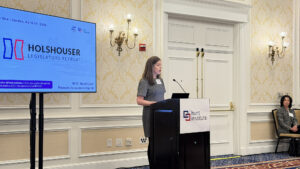
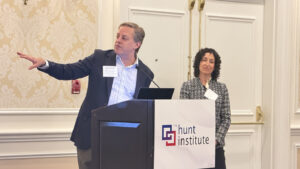
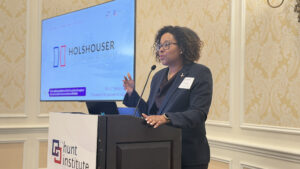
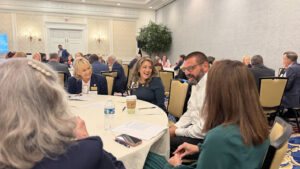
Day One closed with a reception and dinner panel, titled “Creating Pathways and Strengthening North Carolina’s Workforce” which gave legislators a chance to examine how North Carolina is preparing its workforce for a rapidly evolving economy. Alongside our President and CEO, Dr. Javaid Siddiqi, Former State Senator Howard Lee (1991 – 1994; 1996 – 2002), who currently serves as Secretary of our Board of Directors at The Hunt Institute, Governor Josh Stein, Hunt-Kean Leadership Fellow Cohort 4, and NC Superintendent of Public Instruction Mo Green provided opening remarks. Cecilia Holden, President and CEO, myFutureNC then moderated the dinner panel with Jasmine Cox-Wade, Executive Director, Textile Technology Center at Gaston College, John Buxton, President, Durham Technical Community College, and Tom Looney, Chair, North Carolina Board of Community Colleges.
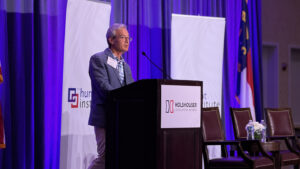
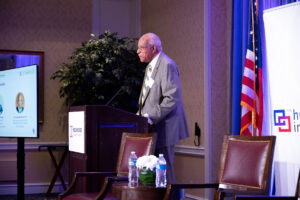
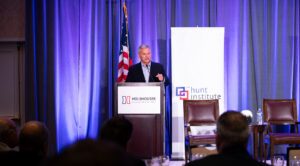
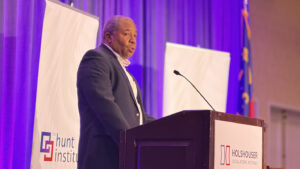
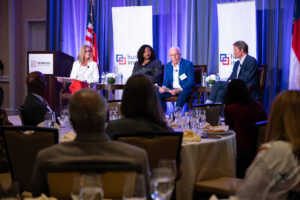
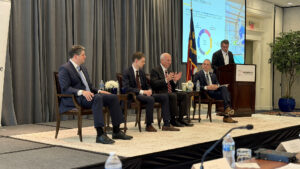
Day Two of the Retreat began with the “Education to Good Jobs: Building North Carolina’s Workforce with Global Lessons” session, which gave legislators a chance to explore how North Carolina can strengthen its workforce and expand access to good jobs, particularly in communities navigating economic disruption, by learning from global leaders like Singapore and Switzerland. The discussion was moderated by Nation Hahn, Managing Director, John M. Belk Endowment with resource experts Senator Brad Overcash, Retreat Co-Chair, Jon Schnur, CEO, America Achieves, Adam Chandler, Policy Director, Office of Governor Josh Stein, and Dr. Mark Poarch, President, Caldwell County Community College & Technical Institute.
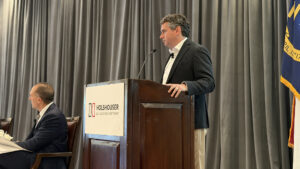 .
. 
Retreat Co-Chair Representative Zack Hawkins then introduced Kelly McManus, Executive Vice President of Education, Arnold Ventures, who moderated an analysis on North Carolina’s opportunities to compound the success of its leading research and higher education institutions, which are vital for advancing innovation, driving economic growth, and supporting the state’s role as a national health hub. Dr. Jeni Corn, Research Director-Social Science, NC Collaboratory, Dr. Ashley Rogers Berner, Director of the Institute for Education Policy, The Johns Hopkins University, and Nadja Young, Chief Brand Officer, MetaMetrics explored how institutions sustain and expand research, develop talent, and respond to emerging workforce and economic trends.
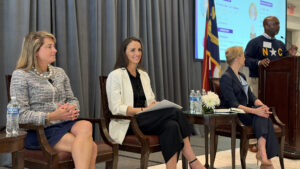
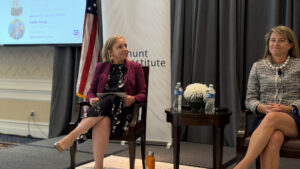
“Data gives us a clearer picture of what’s working and where students are still being left behind. This session reinforced how critically important data is as a tool to make smarter decisions, better target resources, and ultimately improve outcomes for students across North Carolina,” said Retreat Co-Chair, Representative Zack Hawkins – NC House District 31 (Durham County).
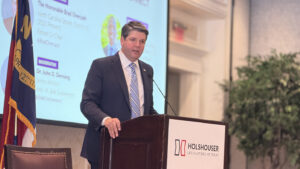
Next up, Retreat Co-Chair Senator Brad Overcash, opened the floor for Dr. John D. Denning, Senior Advisor, John M. Belk Endowment, to moderate the “Bridging the Gap with NC College Connect” session that updated legislators on the statewide initiative that streamlines college admissions for eligible North Carolina public high school seniors. Ni-Eric Perkins, Director, Carolina College Advising Corps (Advise NC), The University of North Carolina at Chapel Hill, and Dr. Jeff Cox, President, NC Community College System, highlighted measurable successes – particularly increased enrollment from rural, urban, and underserved communities, showcased local partnerships and community engagement, and explored opportunities to expand the program.
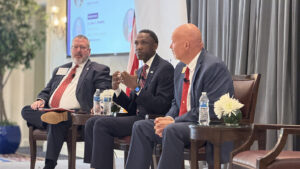
We then transitioned to a discussion opened by Representative Donnie Loftis, exploring universities’ strategies to sustain and expand research programs, develop talent, and respond to emerging workforce and economic trends. Molly Lasagna, Senior Strategy Officer, Ascendium, moderated the panel with resource experts Dr. Karrie G. Dixon, Chancellor, North Carolina Central University, and Dr. Andrew Koricich, Executive Director, Alliance for Research on Regional Colleges, Appalachian State University, sharing research initiatives, partnerships, and strategies that support student success, workforce development, and long-term leadership in health and the economy.
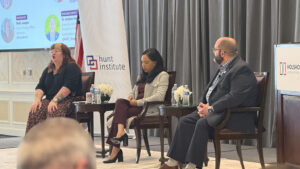
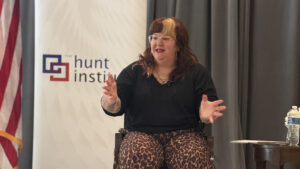
For the Holshouser Legislators Retreat’s final session, we unpacked North Carolina Teacher Pay and Per-Pupil Spending with Michelle Fockler, Senior Managing Director – Alumni Impact, Teach for America North Carolina moderating. Brenda Berg, President and CEO, BESTNC and Dr. Andrew Smith, Senior Policy Advisor, North Carolina Senate examined two of the most important and often misunderstood questions in education policy: how much North Carolina spends on public education and how those dollars translate into teacher compensation, workforce strategy, and student opportunity.
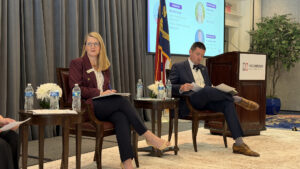
To close out the 2026 Holshouser Legislators Retreat, Dr. Sam Houston, Board of Directors, The Hunt Institute, provided closing remarks. A special thank you to our funders Bezos Family Foundation, Saul Zaentz Charitable Foundation, Burroughs Wellcome Fund, Dogwood Health Trust, and John M. Belk Endowment for supporting this wonderful event and making the programming possible. Finally, our deep appreciation goes out to the entire Hunt Institute team and their dedication to advancing Governor Hunt’s mission of bipartisan dialogue and solutions, especially in our home state of North Carolina.