Improving Literacy for English Learners in Virginia: Collaboration Through the English Learner Network
October 29, 2025
In Virginia, 30 schools joined the Virginia English Learner Network to improve literacy instruction for English Learners. Supported by The Hunt Institute and national experts, this collaboration led to measurable gains in student achievement.
Author: Jaalil Hart, Ph.D., Director of K-12, The Hunt Institute
At a time when education feels highly polarized, one thing remains clear: collaboration works. In Virginia, 30 schools joined forces to strengthen literacy instruction for English Learners and saw measurable improvement in student achievement.
In December 2024, the Virginia Department of Education launched an initiative focused on leveraging local leadership and building educator capacity to improve literacy instruction for English Language Learners (ELs).
English Language Learners have consistently performed lower than their peers in both state and national assessments, signaling systemic inequities in instructional access and support. This gap in performance is referred to as the EL opportunity gap.
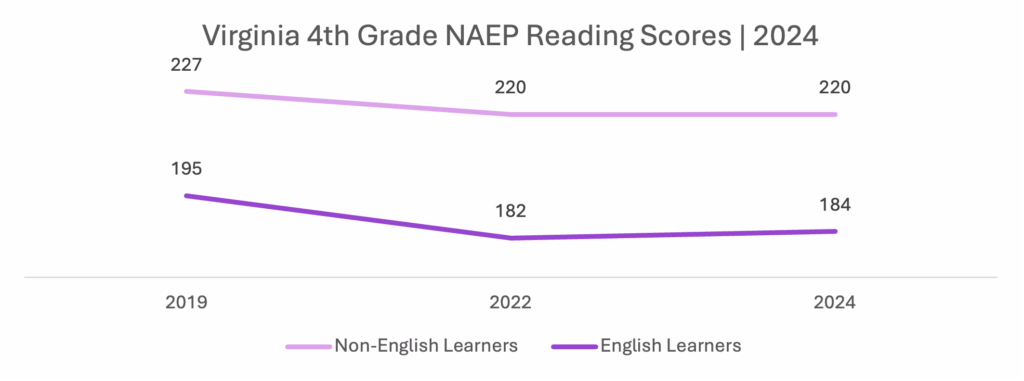
In order to address the EL opportunity gap in the Commonwealth, the Virginia English Learner Network (VA ELN), convened in partnership with The Hunt Institute, brought together 30 schools across 17 different school districts for three convenings and strategic coaching with StandardsWork literacy experts.
Over the course of the convenings, school teams made up of administrators, instructional coaches, reading and nonreading teachers collaborated with district leaders and national experts to analyze current practices and develop plans to address gaps in instruction and service delivery to English Learners on their respective campuses.
The convenings featured keynotes from national experts such as Dr. Claude Goldenberg, who is known for his work on multilingual literacy. The participants analyzed data, developed action plans to implement high-quality instructional materials, and strengthened school and division practices to ensure all students have access to effective literacy instruction.
“It was vital to The Institute that we support these schools with practical, research-based, inexpensive strategies, especially as funding issues loom,” explained Dr. Conrad. “We worked to have schools determine a focus and incorporate that into their other initiatives so that they could maximize capacity and energy.”
As a result, schools across the state shared the following wins:
- One elementary school is piloting a coteaching model with their 5th grade team to better support students and are dedicating time for English Learner and General Education teachers to collaborate.
- A division worked with a school to adjust its schedule to include targeted literacy interventions and is helping teachers make curriculum more accessible to English Learners.
- Many schools reported a clearer understanding of how their students who are English Learners were performing and felt more confident developing stronger plans to support students and teachers to implement evidence-based literacy practices in schools.
“The English Learner Network provided the action-planning, coaching, and collaborative experiences we needed to see meaningful gains in our multilingual learners’ state testing scores. It’s a powerful model for systemic improvement.” Jennifer Blackwell, Director of Multilingual Learner Success | Richmond Public Schools
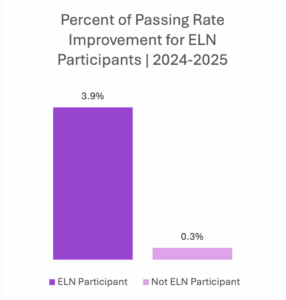
Schools participating in the VA ELN saw tangible improvements. On average, students in schools participating in the program saw a nearly 4 percentage point improvement in passing rates compared to 0.3 percent compared to non-participating schools. High school students saw a significant increase with an 18-percentage point improvement over non-participating high school students. These results suggest that when teachers, leaders, and experts collaborate across schools and regions, even long-standing gaps can narrow.
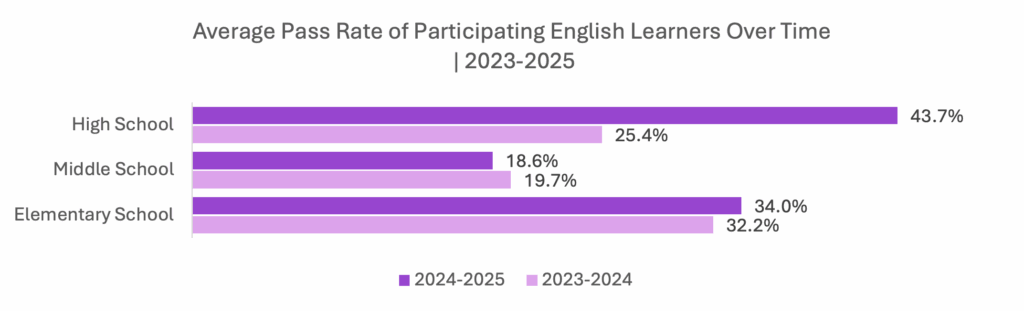
Due to the cyclical nature of school planning, mid-year convenings are typically more effective the year or two following to account for implementation and staff buy-in. Network facilitators are hopeful for continued growth in future years of programming.
One participant shared, “I enjoyed the ELN network and information presented this school year. I am looking forward to implementing our EL action plan for 2025-2026 and continuing our grant next year if possible.”
The Hunt Institute is eager to expand the power of local collaboration. As conveners at heart, our mission is to provide access to high-quality materials and national experts to build the capacity of state and local leaders to make informed decisions for the benefit of students. The VA ELN model is the perfect example of this mission in action.

Need Education Research or Technical, Unbiased Support? We’re Here to Help
The Hunt Institute offers a wide range of technical assistance services and we are here to help. Through programs like The Path Forward, focused on supporting state literacy, or Virginia English Learner Network, aiming to provide direct support to schools and districts supporting marginalized students, The Hunt Institute sits at the intersection of policy, research, and practice. It takes a village to support our students. Only together can we make our school systems the best places for our students to learn and grow.